
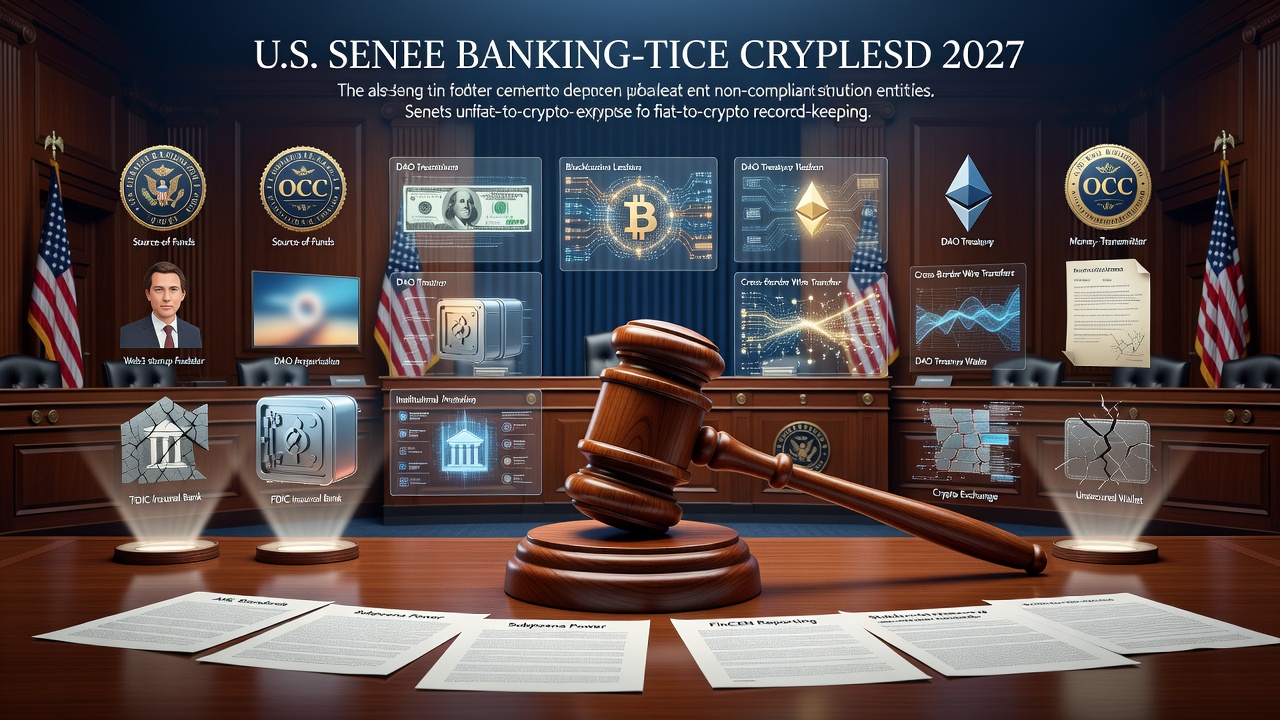
Senator Elizabeth Warren is positioned to chair the Senate Banking Committee starting in 2027, according to a November 7 Yahoo News report citing Wall Street Journal sourcing. For any business bridging fiat and digital assets - a Web3 startup, a DAO treasury, a cross-border payments operator - that's not background noise. It's a signal to get the books in order now.
Why the Chair's Gavel Matters More Than the Headlines Suggest
The Senate Banking Committee controls jurisdiction over bank charters, securities oversight, and consumer financial protection. A chair holds subpoena power - the ability to demand documents, compel testimony, and refer findings to the Justice Department. Warren has spent years pushing for tighter anti-money-laundering standards in crypto; as Ranking Member, she lacked the procedural tools to force votes. As chair, she gets them. That's the real shift here, not just a change in title.
The Compliance Gap Businesses Can No Longer Ignore
Here's the catch: most crypto banking platforms were built for either traditional retail banking or crypto-native exchanges, not for legal entities operating in both worlds at once. FDIC guidance from March 2025 and OCC confirmations on bank-held crypto assets helped, but state money-transmitter licensing, FinCEN expectations, and the absence of a federal stablecoin framework still leave businesses guessing. Fragmented setups - one bank for fiat, one exchange for crypto, a separate wallet for DAO funds - are exactly what a well-resourced investigation is built to expose.
- Fiat-to-crypto on-ramps face likely scrutiny over source-of-funds verification
- Stablecoin issuers may see proposals requiring bank charters and reserve reporting
- DAO treasuries without a legal wrapper face real exposure if subpoenaed
- Cross-border wires tied to crypto activity may require explicit tagging
What Operators Should Do Before the Gavel Changes Hands
Waiting for final legislation is not a strategy. Businesses should audit whether they can produce a complete, timestamped transaction history across both fiat and crypto within the hour - not after weeks of reconstruction. Platforms offering institutional-grade custody, mandatory multi-factor authentication, and unified reporting across asset types are better positioned than those relying on minimal verification or jurisdictional arbitrage. In practice, though, the businesses most at risk are the ones that built around regulatory loopholes rather than around durable compliance infrastructure.
None of this guarantees smooth sailing once the committee convenes. But operators who tighten know-your-business procedures, consolidate banking records, and document beneficial ownership now will be far better positioned than those scrambling once subpoenas start landing.