
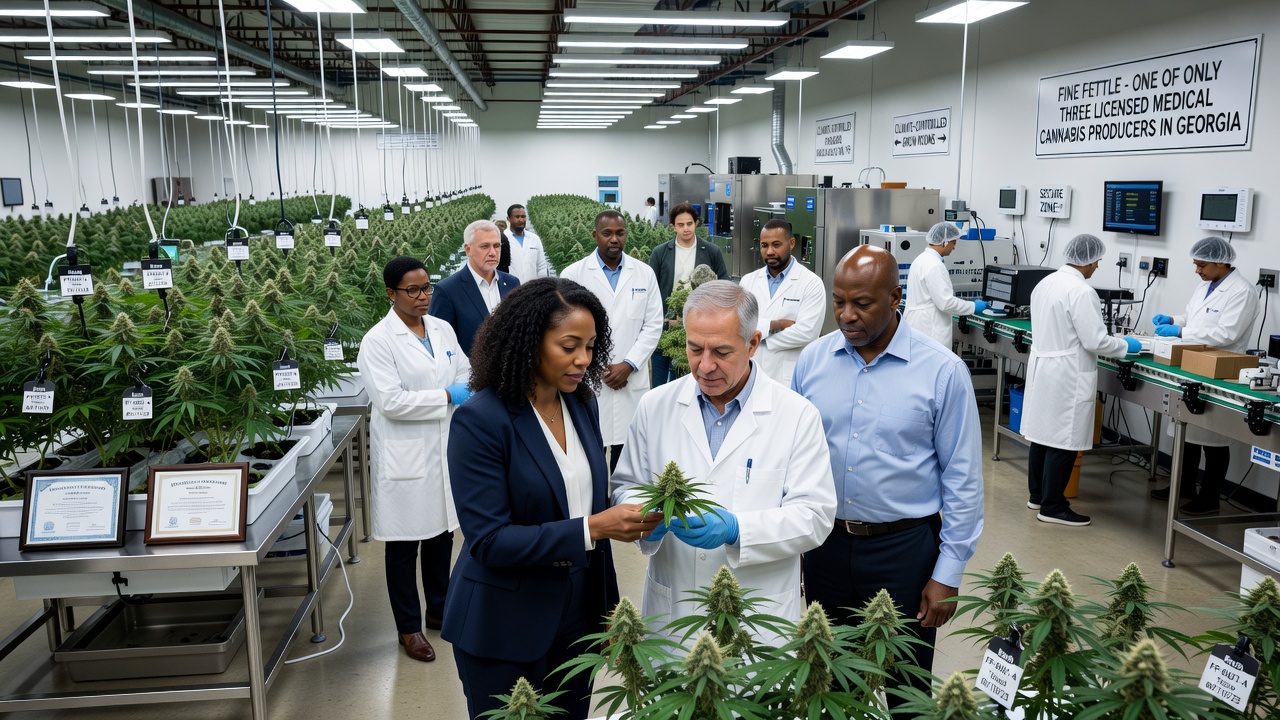
A Macon-based medical cannabis operator invited lawmakers, physicians, and patients into its cultivation and manufacturing facility this month, betting that a firsthand look at the production process might succeed where years of legislative sessions have not. Georgia legalized medical cannabis a decade ago, yet expansion bills have stalled repeatedly, and supporters say the program remains far narrower than what patients actually need.
Fine Fettle, one of three licensed medical cannabis operators in Georgia, runs a vertically integrated operation - cultivation, manufacturing, and distribution to dispensaries all under one compliance structure. That model matters here. Vertical integration in a tightly capped medical market means every batch is tracked from seed to shelf, with lab testing and COA documentation standing between the grow room and the patient. It's a different animal than adult-use markets in other states, where dispensary count and product variety have exploded alongside supporting infrastructure - payment processing, delivery logistics, platforms like the cannabis delivery software montana operators use to manage compliant order fulfillment. Georgia's program, by contrast, is still working out basic access questions.
Why the Bills Keep Stalling
Senate Bill 220 and House Bill 227, the most recent attempts at reform, would have eased the path to a medical cannabis card and updated allowable product forms. Both stalled in their chambers. That's the pattern: expansion proposals get introduced, get discussed, and quietly lose momentum before a floor vote. For an operator running a licensed facility under strict state oversight, that stagnation isn't abstract - it shapes SKU management, product development timelines, and whether the patient population large enough to sustain a wider product menu ever materializes.
The Access Gap, According to Providers
Dr. Elmore Alexander, who toured the facility, framed the limitation in clinical terms rather than political ones. Existing products, he said, address roughly 80% of patients - leaving a meaningful minority without options tailored to their conditions. Expanding permitted product forms would require regulatory sign-off, updated testing protocols, and packaging changes across the supply chain, not just a legislative vote. That's a heavier lift than it sounds, and it's precisely why operators are trying to get lawmakers into the building rather than relying on hearing-room testimony alone.
What Lawmakers Took Away
State Representative Anissa Jones, part of the tour group, said seeing the controlled cultivation and manufacturing process firsthand changed her understanding of the program. Her point was simple but important for policy debate: this isn't loosely regulated plant material, it's a monitored production chain built for consistency batch to batch. That distinction - regulated agriculture versus the public's looser assumptions about cannabis cultivation - tends to be the crux of legislative hesitation. Whether one facility tour shifts enough votes to move a bill through committee next session remains an open question.
- Georgia currently licenses only three medical cannabis producers statewide
- SB 220 and HB 227 both failed to advance out of their chambers
- Providers cite a roughly 20% patient population underserved by current product forms
- Facility tours are being used as an education tool for legislators and physicians