
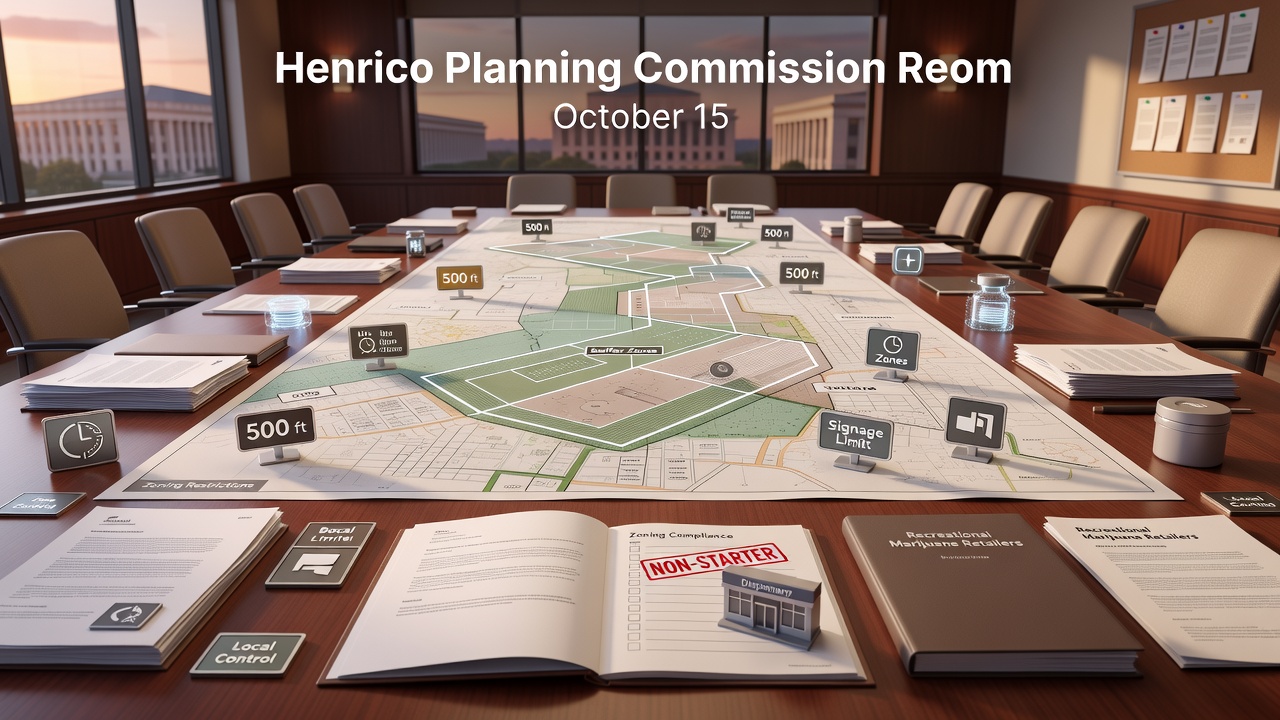
A new set of zoning restrictions on recreational marijuana businesses is headed to the Henrico Board of Supervisors after the county's Planning Commission approved the package on Oct. 15. The vote was unanimous, the discussion brief, and the public comment period empty - a quiet procedural moment that nonetheless carries real weight for any operator eyeing Henrico as a future market.
Why Zoning Matters Before Licensing Ever Begins
Here's the catch that trips up a lot of newcomers to cannabis retail: state licensing approval and local zoning approval are two entirely separate hurdles, and clearing one says nothing about the other. Virginia's adult-use framework has moved in fits and starts, and localities like Henrico have been using the time to build their own guardrails - buffer zones from schools and residential areas, caps on where retail storefronts and cultivation sites can physically locate, and limits on signage or hours. For a prospective dispensary operator, that means site selection has to happen with a zoning map in one hand and a commercial lease in the other. A property that looks perfect on paper can be a non-starter once overlay districts and distance requirements are applied.
What Local Control Means for Operators and Landlords
Local governments in Virginia retain substantial authority to shape where cannabis commerce can occur, even as the state handles licensing, testing standards, and seed-to-sale tracking requirements. That dual-layer structure isn't unusual - it mirrors how many states have handled alcohol retail for decades - but it does create friction. A landlord willing to lease space to a licensed cannabis retailer still needs that parcel to sit in a zone where the use is permitted outright or approved through a conditional process. Multi-state operators scouting expansion sites have learned to budget time and legal fees for this step specifically, because a denied conditional-use permit can stall a build-out for months, with build-out costs and holding costs piling up regardless.
Compliance Pressure Builds on Multiple Fronts
Zoning is just one layer of a compliance stack that dispensary operators already manage daily - inventory logged through state tracking systems, lab testing and certificates of analysis on every batch, child-resistant and compliant packaging, and age-verification protocols at the point of sale. Adding locality-specific siting rules to that list isn't dramatic on its own, but it does narrow the pool of viable real estate in a given jurisdiction, which in turn affects wholesale pricing dynamics and retail competition in that market. Fewer eligible locations can mean less retail density, which can shape consumer access patterns in ways that matter for public health conversations as much as business ones.
What Comes Next
The proposal now moves to the Henrico Board of Supervisors for a final vote. Operators, brokers, and compliance teams watching Virginia's cannabis market would do well to treat this as a template moment: other localities across the state are likely to face similar zoning questions as adult-use retail inches closer to reality, and the jurisdictions that move early tend to set the pattern others follow. For anyone building a Henrico expansion plan, the practical move is straightforward - don't sign a lease until the zoning picture is confirmed in writing.