
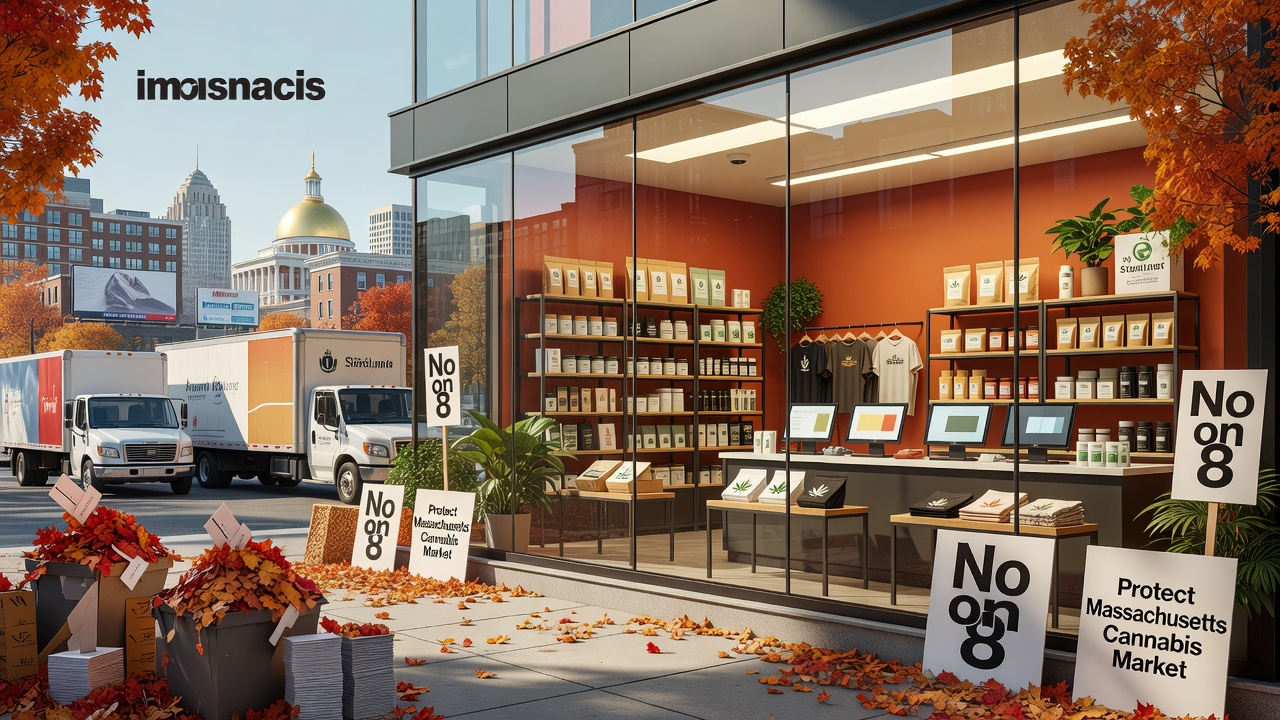
Massachusetts voters crushed Question 8 by a wide margin, rejecting an effort to dismantle the state's adult-use cannabis market. With close to 90 percent of ballots counted Wednesday morning, roughly 76 percent opposed repeal, against about 24 percent in favor. For an industry that has spent years building out licensed retail infrastructure, the result removes an existential threat, at least for now.
What the Repeal Would Have Undone
Question 8 targeted the recreational side of the state's cannabis framework, the one built on adult-use licensing, excise taxation, and a regulatory apparatus separate from the state's older medical cannabis program. Had it passed, dispensary operators who invested in retrofitted retail space, point-of-sale systems calibrated for compliant transactions, and seed-to-sale tracking obligations under state oversight would have faced an unwinding with few modern precedents. Landlords holding leases tied to cannabis-zoned properties, wholesale suppliers with standing purchase agreements, and payment processors who built cashless workarounds for an industry still largely locked out of traditional banking all had exposure riding on this vote.
The margin matters here, not just the outcome. A narrow win might have signaled lingering public ambivalence, inviting another run at restriction down the road. A rout, by contrast, tends to settle questions for a while. Operators can reasonably treat this as a mandate to keep building rather than a reprieve to be spent cautiously.
Why Operators Read This as More Than Relief
The thing is, repeal votes like this one rarely stay contained to a single question on a ballot. They test whether a state's adult-use framework has earned public trust after years of operation - on testing standards, on compliant packaging, on keeping product out of the hands of minors. Massachusetts regulators have leaned on lab testing and certificate-of-analysis requirements, inventory controls, and advertising restrictions to keep the recreational market distinct from the unregulated activity it was designed to replace. Voters, in rejecting repeal so decisively, effectively endorsed that regulatory architecture rather than voting to tear it down and start over.
For multi-state operators watching from outside Massachusetts, the result carries signal value too. Ballot-driven rollbacks have been attempted or threatened in other adult-use states, often framed around public-safety or neighborhood-impact arguments. A 76-24 defeat gives operators elsewhere a data point to cite when state legislatures or local zoning boards revisit cannabis ordinances.
The Business Reality That Doesn't Change
Fair enough, the vote preserves the market. It doesn't resolve the structural pressures operators were already managing before Question 8 ever qualified for the ballot. Section 280E of the federal tax code still blocks standard business deductions for plant-touching companies, squeezing margins regardless of state-level outcomes. Wholesale pricing continues to compress as supply catches up with demand in a maturing market. Compliance logs, delivery manifests, and seed-to-sale reporting remain daily operational obligations, not optional overhead.
- Dispensary operators retain licensing status but still face federal banking and tax constraints tied to cannabis's Schedule I classification
- Compliance requirements around lab testing, product labeling, and age-verification at point of sale remain unchanged by the vote
- Wholesale and retail pricing pressure persists independent of the ballot outcome
- Local zoning and municipal licensing decisions still shape where and how dispensaries can operate
In practice, though, surviving a repeal attempt by this kind of margin buys something operators can't put a price on: planning certainty. That alone may be the most consequential outcome of the night, more than any single regulatory detail.