
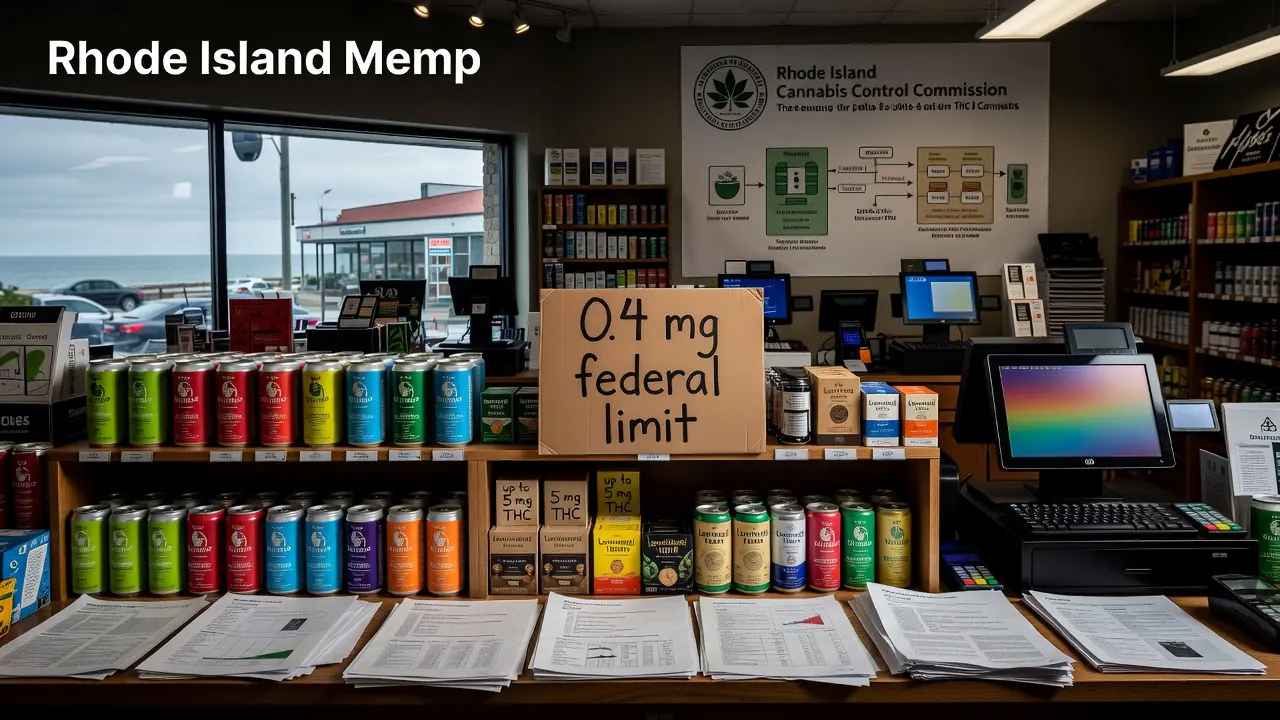
A federal rule taking effect Dec. 11 will cap hemp-derived THC products at 0.4 milligrams per container - a fraction of what Rhode Island currently allows - and the state's Cannabis Control Commission says it has no choice but to enforce it. For the 201 licensed hemp businesses operating in Rhode Island, including 169 retailers, the mismatch between state rules adopted earlier this year and the incoming federal standard has turned inventory planning into guesswork.
A regulatory gap opened by chemistry, closed by Congress
The trouble traces back to the 2018 Farm Bill, which legalized hemp containing 0.3% THC or less by dry weight but never anticipated how easily that threshold could be engineered around. Extraction and conversion methods let processors pull cannabinoids from raw plant material and turn them into potent compounds like delta-8 and delta-9 THC - compliant on paper, intoxicating in practice. That loophole fueled a beverage category that didn't exist in Rhode Island until August 2024, when the state's former Office of Cannabis Regulation began licensing liquor stores, vape shops and bars to sell low-dose THC drinks. Rhode Island's hemp market generated $2.85 million in sales in 2025, with THC-infused drinks and seltzers accounting for roughly 83% of that total. Congress's new federal definition, originally set for Nov. 12 and pushed back a month as part of a short-term funding bill, effectively guts that product category overnight.
Why hemp and cannabis play by different rules
Operators understandably ask why state regulators are enforcing a federal THC cap on hemp while continuing to license adult-use cannabis sales that remain federally illegal outright. The commission's answer comes down to legal architecture, not policy preference. Rhode Island's cannabis program exists because the state built a licensing and taxation framework from scratch, independent of federal law. Hemp is different: it was federally legal under a specific statutory definition, and now that definition has changed. States can't simply ignore an amended federal statute the way they've chosen to tolerate cannabis under their own frameworks. That distinction matters for compliance teams trying to explain to budroom staff and wholesale buyers why one shelf category is untouched and another is about to disappear.
Operational fallout for retailers and suppliers
For businesses like Lovewell Farms, the practical questions are immediate: what happens to finished inventory, batches already tested and packaged under the old 5-milligram-per-package standard, sitting in warehouses ready for delivery manifests to liquor stores? The commission has signaled it won't demand businesses shut down outright before the deadline, citing uncertainty over whether the Trump administration will introduce a new federal hemp framework. But that wait-and-see posture leaves little room for operators to plan seed purchases, cultivation cycles or capital investment in processing equipment.
Payments present another layer of risk. Industry representatives warn that banks may treat hemp products the same way they've long treated cannabis - refusing card processing once a product falls outside clear federal legality. That would push hemp retailers toward cash-heavy operations overnight, with all the security, accounting and tax-reporting headaches that regulated cannabis dispensaries already know well.
What compliance teams should watch
- Updated guidance expected from the Cannabis Control Commission ahead of the Dec. 11 deadline
- Potential loss of card payment processing for hemp-derived beverage and edible sales
- Inventory exposure on products packaged above the new 0.4-milligram-per-container limit
- Uncertainty over whether a revised federal hemp framework will emerge before enforcement begins
Whatever framework eventually replaces the current rules, retailers and wholesalers are left managing compliant packaging standards, lab testing protocols and SKU-level inventory decisions against a deadline that keeps moving - not exactly the stable footing small agricultural and retail businesses need to plan a growing season, let alone a balance sheet.