
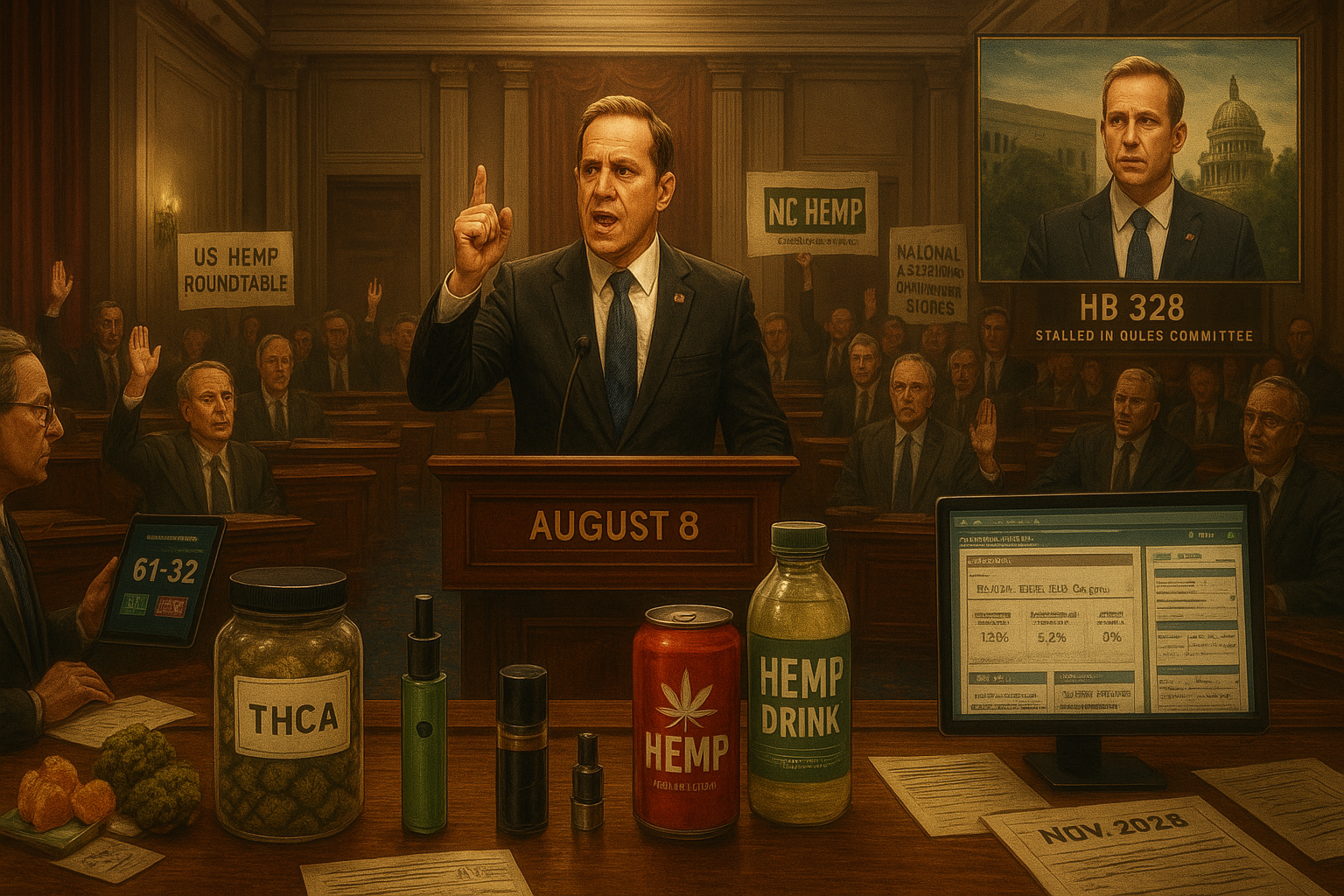
A 61-32 vote on Aug. 8 kept a 30-day delay to federal hemp restrictions intact, dealing Sen. Ted Budd, R-NC, a defeat in his effort to force the broader Nov. 12 crackdown to take effect on schedule. Budd's amendment, S.Amdt. 6747, would have struck Section 2019 of the continuing resolution, the provision pushing the effective date of new hemp THC limits to Dec. 11. Instead, senators chose to give the administration and Congress an extra month to sort out a regulatory approach - a move that matters enormously for operators selling hemp-derived cannabinoid products in convenience stores, smoke shops, and online channels nationwide.
The underlying policy fight traces back to a hemp provision Congress approved in November 2025, which redefines hemp based on total THC content and caps finished hemp-derived cannabinoid products at 0.4 milligrams of combined total THC and similar cannabinoids per container. That threshold is dramatically lower than what's currently sold across much of the intoxicating hemp market - delta-8 gummies, THCA flower, hemp-derived beverages - meaning full enforcement would functionally wipe out large swaths of retail inventory built on the 2018 Farm Bill's looser hemp definition. For state-licensed cannabis retailers watching this fight from the sidelines, the episode is a reminder of how compliance infrastructure built for one regulatory regime can become obsolete overnight when Congress moves the goalposts; operators running platforms like Oklahoma seed-to-sale dispensary software already track cannabinoid concentrations at the batch level, and that same discipline - SKU-level THC tracking, current COAs, defensible chain-of-custody records - is exactly what hemp retailers now need to build if they want to survive whatever framework eventually replaces the current patchwork. Oklahoma seed-to-sale dispensary software
A Coalition Split Down the Middle
What's striking here is how the vote scrambled ordinary alliances. Twenty-one Republicans joined 11 Democrats in opposing the motion to table Budd's amendment, while 105 organizations - including the US Hemp Roundtable, the National Association of Convenience Stores, and several North Carolina hemp and brewing groups - lobbied the other direction, arguing the delay buys time for Congress to write actual regulation rather than simply banning products outright. That's not a small distinction for a retailer trying to plan inventory twelve months out. A flat THC ban and a regulated market with age gates, testing mandates, and packaging rules are two very different compliance regimes, with very different capital requirements attached.
North Carolina's Parallel Standoff
The federal fight has an unresolved twin at the state level. House Bill 328 would import the same 0.4-milligram threshold directly into North Carolina law, stripping most THC beverages, vapes, and THCA flower from shelves regardless of what Washington ultimately decides. The Senate adopted the conference report 37-6 back on July 2, but the House has repeatedly declined to act, leaving the bill parked in the Rules Committee. House Speaker Destin Hall has acknowledged broad agreement that the state's unregulated hemp market can't continue as-is, even as lawmakers remain split on the fix.
What Operators Should Watch
- Whether Congress uses the 30-day window to pass a workable regulatory framework or simply runs out the clock
- Whether states like North Carolina move independently of federal timelines, creating compliance obligations that survive any federal delay
- How CMS's stated interest in preserving CBD access for seniors and people with disabilities factors into any final rulemaking
- Whether packaging and marketing restrictions aimed at child-appealing products become a permanent fixture of any compromise
None of this is settled. The Senate passed the broader spending package 90-6 even after tabling Budd's amendment, and the underlying THC threshold is still scheduled to take hold - just a month later than Budd wanted. For hemp retailers and licensed cannabis operators alike, the practical lesson is the same one compliance teams have learned repeatedly since state legalization began: build recordkeeping and testing systems for the strictest plausible outcome, not the most convenient one.