
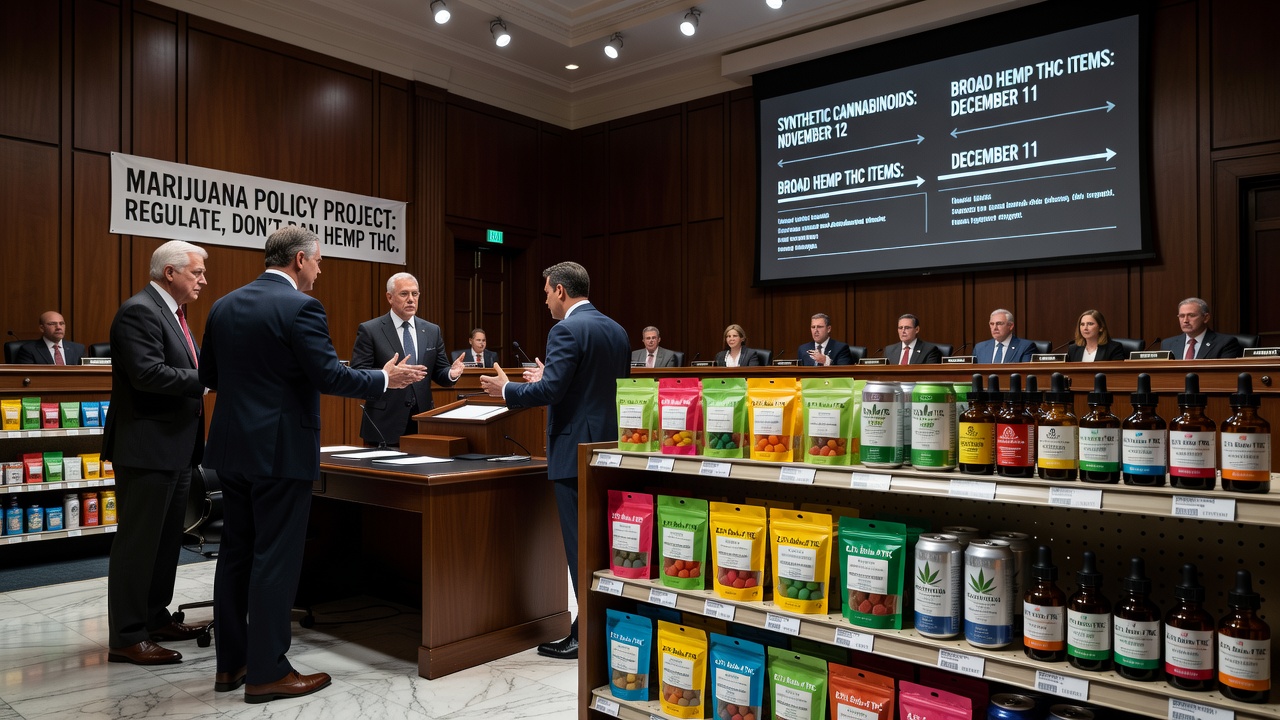
The Marijuana Policy Project is leaning hard on Congress this month, urging lawmakers to scrap a scheduled federal ban on hemp-derived THC products and replace it with actual regulation. The group's action alert lands at a strange moment in the hemp fight: the ban's effective date has already slipped once, from November 12 to December 11, buying negotiators a few more weeks to sort out what comes next.
That extra month matters. It's the difference between a market that gets restructured and one that simply disappears overnight, taking compliant businesses down with the noncompliant ones.
What's Actually at Stake for Hemp Retailers
The 2018 Farm Bill opened the door to hemp products with less than 0.3 percent delta-9 THC on a dry-weight basis - a definition that, in practice, left room for all kinds of intoxicating products derived from hemp rather than marijuana. Last year's redefinition tightened that to 0.4 milligrams of total THC per container, a threshold so low it would knock out the overwhelming majority of hemp beverages, gummies and tinctures currently on store shelves and convenience-store counters nationwide. MPP puts the figure at 95 percent of the existing hemp product market. Whether or not that estimate holds up precisely, the direction is clear: this isn't a tweak, it's a near-total market reset.
There's also a carve-out worth flagging for anyone running compliance checks on their SKU list. Synthetic cannabinoids not naturally producible by the cannabis plant lose their legal status on November 12 regardless of what happens with the broader deadline. That distinction between naturally derived and synthetic compounds is likely to become a recurring compliance headache - lab testing and COAs will need to answer not just "how much THC" but "what kind."
Regulation as the Alternative to Prohibition
MPP's pitch to Congress isn't "do nothing." It's a specific regulatory wish list: potency limits, testing and labeling standards, age restrictions, and keeping clearly dangerous products out of commerce - essentially an alcohol-style compliance model rather than outright criminalization. That framing matters for operators because it signals where the policy fight is actually headed. Several bills already reflect it. The Van Duyne-Landsman proposal would tax and regulate hemp THC drinks like alcohol. Comer's circulating draft adds packaging, testing and age-limit requirements. Barr's bill goes further, laying out manufacturing, labeling, sales and taxation rules with a 21-and-over age floor.
None of these have gained real traction with congressional leadership yet. That's the uncomfortable part for operators trying to plan inventory, wholesale contracts or store compliance programs around a deadline that keeps moving. Building a business plan on pending legislation is not a strategy - it's a bet.
Competing Pressures from Industry and Public Health Groups
This isn't a clean two-sided fight. Some marijuana businesses view the federally legal hemp channel as an end-run around state license caps and interstate commerce restrictions that licensed, tax-paying dispensaries have to live with - hence support in parts of the regulated cannabis industry for recriminalization. On the other side, groups like Community Anti-Drug Coalitions of America are pressing candidates on where they stand on hemp THC access, largely from a public-health and youth-access angle. Convenience store advocates, meanwhile, want a regulatory path that keeps them in the retail mix. The National Restaurant Association has asked for delay and regulation rather than a ban, framing hemp beverages as a lower-alcohol alternative restaurants want to keep offering.
Add in the White House's own position - Trump has publicly pushed Congress to preserve access to full-spectrum CBD products while still restricting items that pose real health risks - and you've got a policy fight with no fewer than five distinct constituencies, each wanting a different version of "regulation."
What Operators Should Watch Next
- The December 11 deadline for most hemp THC products, and whether Congress extends it again or lets it stand
- Whether age-gating to 21 and over becomes a federal baseline or remains a patchwork of state rules
- How synthetic cannabinoid restrictions, effective November 12, get enforced at the retail and distribution level
- Whether any of the pending bills - Van Duyne-Landsman, Comer, or Barr - actually moves out of committee
For dispensary operators, wholesalers and convenience retailers alike, the practical takeaway is the same: compliance logs, lab testing protocols and supplier contracts built around current hemp thresholds may need revision on short notice. Planning for multiple regulatory outcomes, rather than betting on one, is the only prudent posture right now.