
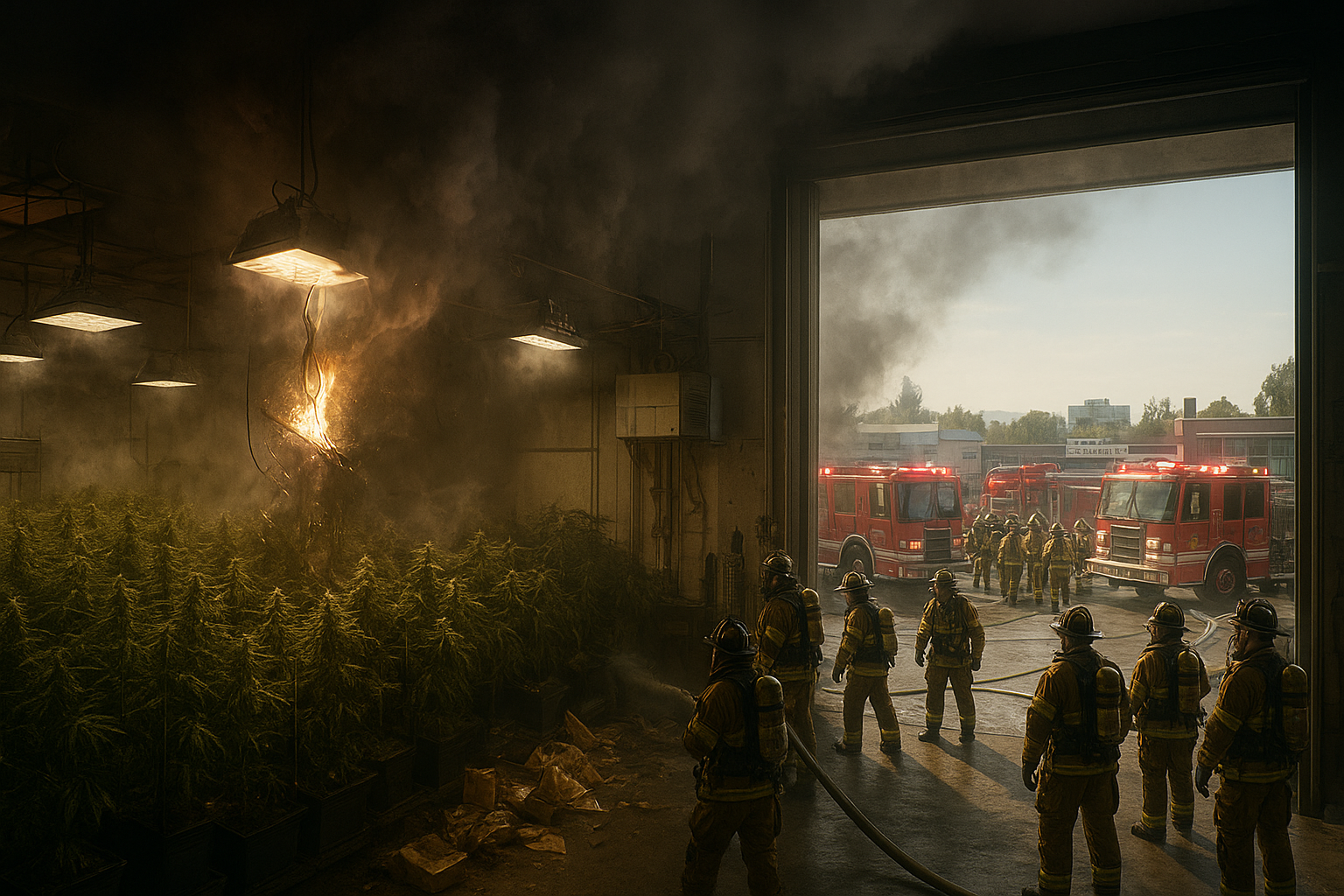
A broken light fixture ignited a fire Tuesday inside a permitted cannabis grow room at a warehouse complex in Santa Rosa, California, causing an estimated $180,000 in combined building and contents damage, fire officials confirmed Wednesday, July 8. The blaze broke out shortly after 11:50 a.m. at a facility in the 2700 block of Giffen Avenue - a site that houses multiple cannabis-growing operations - and was contained by 12:10 p.m. No injuries were reported.
The incident draws attention to a risk that licensed cultivators across regulated markets don't always price into their operational planning: the fire load inside a commercial grow room is substantial, and the lighting infrastructure that drives it runs hard, often around the clock. For cannabis operators building out compliance programs - whether they're running cultivation in California or configuring dispensary software in Minnesota - facility safety infrastructure is as much a regulatory exposure as it is a physical one. A fire that originates in a licensed space triggers inspections, potential operational interruptions, and documentation obligations that ripple through the entire seed-to-sale chain.
According to Paul Lowenthal, the city's division chief fire marshal, smoke damage accounted for the majority of the estimated loss. Twenty-three personnel responded, including three fire engines, a ladder truck, a heavy rescue unit, a squad, two battalion chiefs, and a fire investigator. Notably, the facility was not red- or yellow-tagged following the incident - meaning regulators did not restrict its continued use based on any identified safety deficiency. That's a meaningful distinction for the operators inside that complex.
Why Grow Room Electrical Systems Carry Outsized Risk
Commercial cannabis cultivation is an energy-intensive operation. High-intensity discharge lamps, LED arrays, and the HVAC systems needed to manage canopy heat draw significant electrical loads - often continuously, across multiple rooms within a single warehouse footprint. That's not a knock on the industry; it's just physics. But it does mean that fixture degradation, faulty wiring, or inadequate maintenance schedules create real ignition risk in an environment where dry plant material, dense packaging supplies, and concentrated airflow are all present simultaneously.
Here's the catch: many licensed cultivators lease commercial or industrial space that wasn't originally built for agricultural-style electrical demand. Retrofitting a warehouse for cannabis cultivation - installing proper circuit capacity, ballast systems, humidity controls - requires both capital and permitting, and the quality of that buildout varies considerably from operator to operator. A broken fixture sounds like a minor maintenance failure. In a grow room running 18-hour light cycles, it can be the event that shuts down an entire harvest cycle.
Operational and Compliance Implications for Cannabis Facilities
From a compliance standpoint, a fire at a licensed cannabis facility sets several processes in motion simultaneously. Depending on state and local rules, operators may be required to report the incident to their licensing authority, document any inventory loss or destruction through their seed-to-sale tracking system, and preserve records for inspection. In California, the Department of Cannabis Control maintains oversight of licensed cultivators and has the authority to review facilities following reportable incidents.
The fact that the Giffen Avenue facility was not tagged for restricted use suggests the structural damage was contained enough that regulators saw no immediate grounds to pull access. That's operationally significant - a red tag effectively halts production and triggers a compliance review process that can take weeks to resolve, with inventory in METRC in a kind of limbo. Smoke damage is expensive and disruptive, but it's recoverable. A formal restriction is a different problem.
What's striking here is that the fire originated not from a complex failure - not an electrical panel overload or a sophisticated system fault - but from a broken fixture. That's the kind of maintenance-level issue that a regular facility inspection protocol is specifically designed to catch. Licensed operators running multi-room cultivation spaces should treat their lighting infrastructure with the same compliance discipline they apply to their inventory logs.
What This Means for Cannabis Facility Operators
For operators managing cultivation at scale, this incident is a straightforward reminder that facility maintenance is a compliance function, not just a facilities management task. A few operational considerations worth taking seriously:
- Scheduled inspections of lighting fixtures, ballasts, and electrical connections should be documented and logged - not just performed informally
- Commercial grow rooms operating in leased industrial space should confirm that their electrical buildout meets both local fire code and the load requirements of their actual equipment
- Insurance coverage for cannabis cultivation facilities should explicitly address fire and smoke damage to inventory, not just structure - and operators should verify how a seed-to-sale system handles inventory destruction events for compliance reporting
- Landlords leasing space to cannabis cultivators carry their own exposure; lease agreements should clearly assign responsibility for electrical system maintenance and code compliance
To put it plainly: $180,000 in damage from a broken light fixture is a preventable loss. The regulatory apparatus around licensed cannabis cultivation is designed in part to prevent exactly this kind of outcome - but that apparatus only works when operators treat maintenance and safety inspection as ongoing obligations, not background noise.